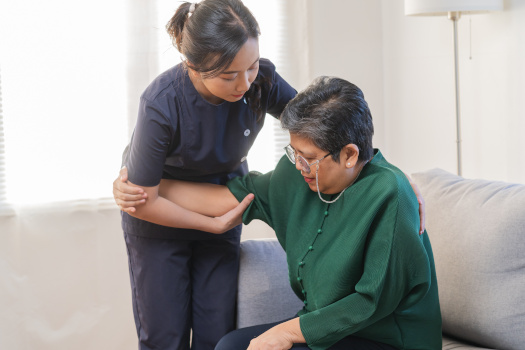
Live-in-style care is a home care model in which a caregiver resides in the client’s home for several consecutive days, providing support and supervision while taking scheduled sleep breaks. Because it uses a flat daily rate instead of hourly billing, it can significantly reduce the cost of around-the-clock care for seniors who don’t require overnight awake supervision.
Finding reliable care for a senior loved one who needs supervision day and night can be financially overwhelming for many families. However, live-in-style care offers a unique solution that effectively balances safety with affordability. This guide explains how this model works and why it might be the budget-friendly answer your family needs.
What Is Live-In-Style Care?
Live-in care is exactly what it sounds like: a caregiver lives in the home with your loved one for a few consecutive days at a time. Rather than working a strictly defined 8-hour shift and then leaving, the caregiver eats, sleeps, and assists your loved one within the home environment.
Typically, two caregivers rotate schedules to provide coverage for the entire week. For example, one caregiver might stay for four days and a second caregiver takes over for the remaining three. This model provides continuity and ensures someone is always present in the house, ready to assist with activities of daily living, medication reminders, and companionship. Because the caregiver is present for 24 hours but is allowed to sleep, the billing structure is significantly different from traditional hourly care.
Some seniors only require help with a few daily tasks so they can maintain their independence. However, those living with serious illnesses may need more extensive assistance. Luckily, there is professional live-in care Tucson seniors can rely on. Home can be a safer and more comfortable place for your loved one to live with the help of an expertly trained and dedicated live-in caregiver.
How Is Live-In Care Different from Traditional 24-Hour Home Care?
The key difference is that live-in caregivers sleep on-site, while 24-hour care requires fully awake shifts around the clock. To understand the savings, you must first understand the difference between live-in care and 24-hour care, as these terms are often used interchangeably but refer to very different services.
- 24-hour care – This usually involves two or three caregivers working 8- to 12-hour “awake” shifts. The caregiver is required to be awake and alert the entire time, even in the middle of the night. This is necessary for seniors who wander frequently or have intensive care needs that require checking every hour.
- Live-in care – The caregiver is provided a private room and is permitted an 8-hour sleeping break. While the caregiver is on the premises for 24 hours, services aren’t billed for every single hour at an hourly rate because of the sleeping break.
Why Does the Flat Daily Rate Make Live-In Care More Affordable?
Live-in care uses a daily rate instead of hourly billing, which reduces total costs for full-time supervision. The primary way live-in care saves you money is through its billing structure. Standard home care is billed by the hour. If you require coverage for 168 hours a week (24 hours x 7 days) at a standard hourly rate, the costs can escalate to over $15,000 or $20,000 per month depending on your location.
Live-in care, conversely, is generally charged at a flat daily rate. Because the caregiver is sleeping at the client’s home and not “working” every second of the day, some agencies (and private hires) often charge roughly half the cost of hourly 24-hour care.
Financial benefits include:
- Reduced overtime – With fewer shift changes and a flat rate, you often avoid the overtime premiums associated with scheduling multiple staff members for hourly shifts.
- Predictable billing – A flat daily rate makes it much easier to budget for long-term care compared to fluctuating hourly schedules.
- No night shift premium – You aren’t paying a premium for someone to stay awake and watch your loved one sleep, provided he or she sleeps through most of the night.
Who Qualifies for Live-In Care?
Live-in-style care is best for seniors who sleep through the night, have space for caregivers, and need general supervision rather than constant overnight monitoring. While the savings are substantial, live-in care isn’t suitable for every situation. To take advantage of this cost-effective model, specific criteria usually must be met to ensure the safety of the client and the wellbeing of the caregiver.
Ideal candidates for live-in care typically:
- Sleep through the night – The senior generally needs to sleep through the night with minimal interruptions. If the caregiver has to wake up more than once or twice, the service may need to switch to an hourly billing model.
- Have spare space – The home must have a private furnished bedroom for the caregiver to rest and store personal belongings.
- Need general supervision – This model is perfect for seniors who are at risk for falls or have mild dementia but don’t require complex medical monitoring every hour.
While seniors with mild dementia may not need constant monitoring, those who are in the later stages of dementia often require around-the-clock assistance. Aging in place can present a few challenges for seniors living with dementia. However, with the help of professional Tucson dementia care, older adults can still live independently at home. Families can rely on Home Care Assistance to provide their elderly loved ones with mental and social stimulation, timely medication reminders, assistance with meal prep, and much more. Our caregivers are available around the clock to help your loved one live a happier and healthier life.
How Does Caregiver Continuity Lead to Long-Term Cost Savings?
Beyond the direct dollar amount, live-in care saves families money by reducing turnover and enhancing health outcomes. Because there are only two caregivers rotating, they become deeply familiar with your loved one’s routine, health baseline, and personality.
This consistency allows caregivers to immediately notice subtle changes in health—such as a slight fever or a change in appetite—potentially preventing costly hospital readmissions or emergency room visits. Furthermore, the strong bond formed between the client and the caregiver reduces the emotional stress and administrative burden of constantly training new staff, which is a hidden cost of high-turnover agency models.
Many seniors prefer aging in place over moving to assisted living facilities. If your senior loved one needs assistance to remain safe and comfortable while living at home, reach out to Home Care Assistance, a leading provider of home care Tucson seniors and families can rely on for compassionate, high-quality service. Our dedicated in-home caregivers can assist with meal prep, bathing and grooming, exercise, medication reminders, and many other important tasks. If your loved one needs assistance with the challenges of aging, reach out to one of our knowledgeable, compassionate Care Managers today.
Frequently Asked Questions
What are live-in care services?
+
Live-in care provides around-the-clock support from a caregiver who resides in the home, offering assistance with daily tasks and companionship.
Who benefits from live-in care?
+
Live-in care is ideal for individuals who need continuous support due to aging, chronic conditions, or recovery from surgery.
How is a live-in caregiver matched to a client?
+
Caregivers are carefully selected based on the client’s needs, preferences, and personality to ensure compatibility.
What tasks does a live-in caregiver handle?
+
Caregivers assist with personal care, household chores, meal preparation, medication reminders, and emotional support.
Is live-in care more affordable than assisted living?
+
Costs vary, but live-in care can be a cost-effective alternative to assisted living, especially for those who prefer to remain at home.