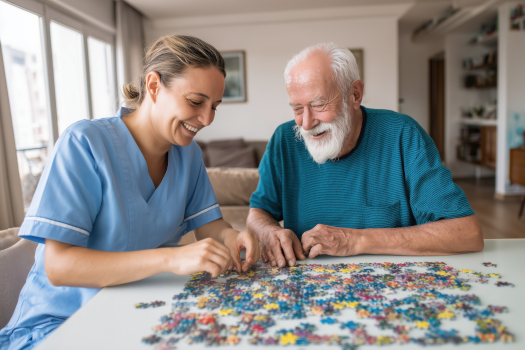
Caregivers can help their senior loved ones stay mentally stimulated by encouraging activities that engage the mind, such as puzzles, reading, social interaction, and learning new skills. Mental stimulation is essential for cognitive health, particularly for older adults or those recovering from illness. Here are several practical strategies caregivers can use to keep their loved ones mentally active and engaged.
Why Is Mental Stimulation Important for Overall Health?
Mental stimulation plays a critical role in maintaining cognitive function and emotional wellbeing. Regular mental exercise can:
- Boost cognitive health and reduce the risk of dementia
- Enhance memory and problem-solving skills
- Boost mood and reduce feelings of depression or anxiety
- Enhance quality of life and sense of purpose
- Maintain neural connections and brain plasticity
Just as physical exercise keeps the body strong, mental challenges keep the brain sharp and resilient.
What Types of Activities Promote Mental Engagement?
A variety of activities can provide meaningful mental stimulation. Consider incorporating these options based on your loved one’s interests and abilities:
- Puzzles and games – Crosswords, Sudoku, jigsaw puzzles, and card games challenge cognitive skills.
- Reading and audiobooks – Books, magazines, and newspapers keep the mind active and provide conversation topics.
- Creative pursuits – Art, music, crafts, and writing offer outlets for self-expression.
- Learning opportunities – Online courses, documentaries, or language apps introduce new knowledge.
- Social activities – Conversations, video calls, and group activities stimulate thinking and emotional connections.
The key is to match activities to your loved one’s cognitive level and personal preferences, ensuring he or she feels successful rather than frustrated.
When their aging loved ones need companionship and socialization a few hours a week or just need minor assistance with daily household tasks, Tucson respite and overnight care can be a wonderful solution. At Home Care Assistance, we thrive on helping seniors maintain their independence while living in the comfort of home.
How Can Caregivers Encourage Social Interaction?
Social engagement is one of the most powerful forms of mental stimulation. Caregivers can foster meaningful connections by:
- Scheduling regular video calls or visits with family and friends
- Joining community groups, senior centers, or faith-based organizations
- Arranging outings to museums, concerts, or local events when possible
- Facilitating participation in clubs or hobby groups
- Encouraging volunteer opportunities that match their loved one’s abilities
Even brief daily conversations about current events, memories, or shared interests can provide valuable cognitive exercise while strengthening relationships.
If your elderly loved one needs help maintaining a high quality of life while aging in place, reach out to Home Care Assistance, a trusted provider of Tucson senior care. Our caregivers provide transportation to and from medical appointments and social events, nutritious meal preparation, assistance with daily exercise, and help with everyday tasks like bathing, grooming, and light housekeeping.
What Role Does Physical Activity Play in Mental Health?
Physical activity directly benefits mental stimulation and cognitive health. Movement increases blood flow to the brain and releases mood-boosting chemicals. Caregivers can promote both physical and mental wellness through:
- Gentle exercises like walking, stretching, or chair yoga
- Gardening or other outdoor activities
- Dancing to favorite music
- Physical therapy exercises that also require concentration
- Balance and coordination activities
Combining physical movement with mental tasks—such as counting steps or naming objects during a walk—maximizes cognitive benefits.
How Can Caregivers Create Stimulating Environments?
The physical environment significantly impacts mental engagement. Caregivers should strive to create spaces that encourage activity and interaction:
- Keep books, games, and craft supplies easily accessible.
- Display family photos and meaningful objects that spark memories.
- Ensure good lighting for reading and detailed tasks.
- Minimize distractions like excessive television time.
- Rotate activities to maintain novelty and interest.
- Create comfortable spaces for both solitary and social activities.
A thoughtfully arranged environment naturally invites participation and reduces barriers to engagement.
Mental stimulation is especially important for seniors who are living with cognitive decline due to age-related conditions such as Alzheimer’s or dementia. If your senior loved one needs professional dementia care in Tucson or a nearby area, caregivers are available around the clock to provide the high-quality care he or she needs. Using the revolutionary Cognitive Therapeutics Method, dementia caregivers can help your loved one stay mentally engaged and delay the progression of the disease. Reach out to one of our Care Managers today to schedule a free in-home consultation.
Frequently Asked Questions
How often should mentally stimulating activities be incorporated into daily routines?
+
Aim for some form of mental stimulation every day, even if only for 15–30 minutes. Consistency matters more than duration, and activities can be spread throughout the day.
What if my loved one resists or shows no interest in activities?+
Start with familiar activities your loved one has enjoyed in the past and introduce new options gradually. Respect your loved one’s preferences and energy levels, and avoid forcing participation that may cause stress.
Can too much mental stimulation be overwhelming?
+
Yes, balance is important. Watch for signs of fatigue, frustration, or anxiety and adjust the difficulty and duration of activities accordingly. High-quality engagement is more valuable than quantity.
Are digital devices helpful or harmful for mental stimulation?+
Digital devices can be beneficial when used intentionally for brain games, video calls, or educational content. However, passive screen time should be limited in favor of interactive activities.
How do I know if the activities are at the right difficulty level?+
Activities should be challenging enough to engage attention but not so difficult that they cause frustration. Success and enjoyment are good indicators the difficulty level is appropriate.